CARD LIBRARY


ED1
As of 2022, only 13% of crowned Miss America winners have been women of color.
*Used source material to research and analyze the history of pageant winners since 1921.

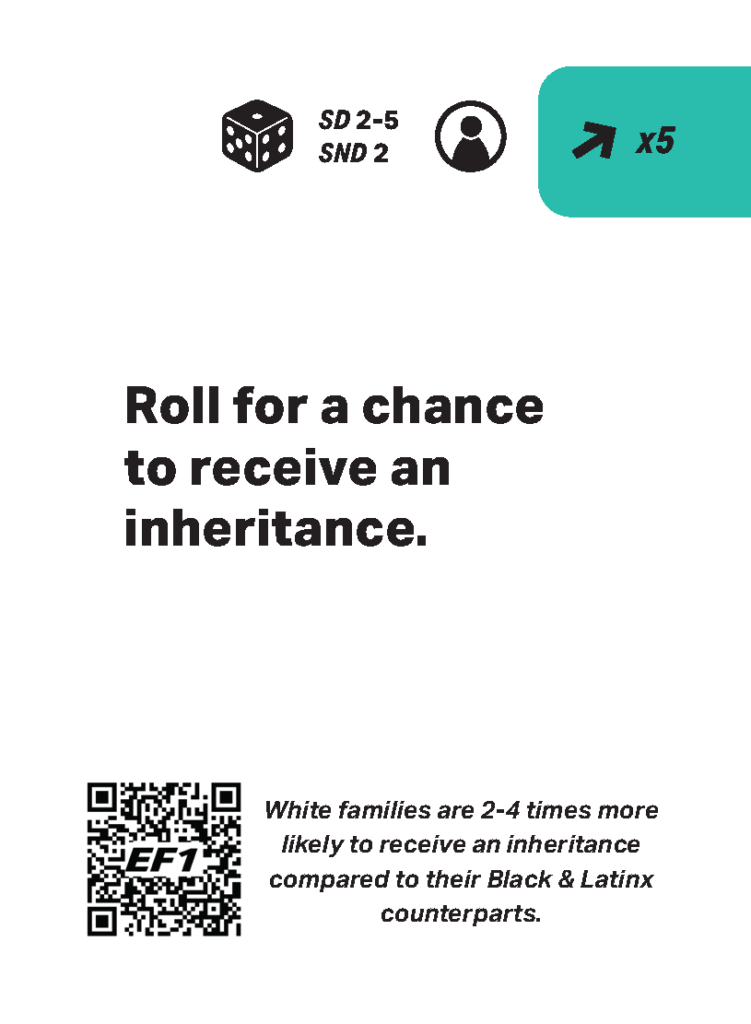
EF1
White families are 2-4 times more likely to receive an inheritance compared to their Black & Latinx counterparts.
“Twenty-three percent of white families (heads aged 30 to 59) have ever received an inheritance, compared to nearly 11 percent of black families and nearly 6 percent of Hispanic families (Table 5).”


EP1
White professionals are about twice as likely to be promoted into management as their Asian American counterparts.
“And our analysis found that white professionals are about twice as likely to be promoted into management as their Asian American counterparts.”

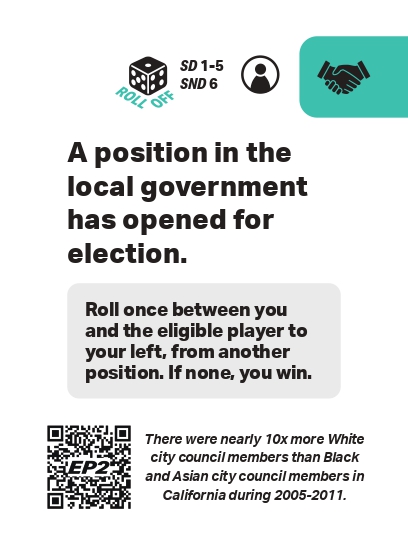
EP2
There were nearly 10x more White city councils members than Black and Asian city council members across the state of California during 2005-2011.
*See Table 1—Summary Statistics on Page 119.


EP3
In 2019, only 15% of new directors of publicly traded companies were from an ethnic minoritized group.
*Correction: The playing card should say ‘2019’ and not ‘2009’. “In 2019…approximately 15 percent of new board seats at all Russell 3000 companies are filled by minorities.” Note: The Russell 3000 index contains 3,000 publicly traded U.S. companies or about 96% of the U.S. equity market.

EW1
In 2020, Latinx adults were nearly twice as likely to be furloughed or laid off as their White counterparts.
“The Post-Ipsos poll finds workers in blue-collar industries are more than twice as likely to report being laid off or furloughed as those in white-collar industries, 26 percent compared with 11 percent.”
“Black and Hispanic workers are bearing the brunt of the economic crisis because they are overrepresented in industries that were hit first by social distancing mandates and stay-at-home orders, economists say.”

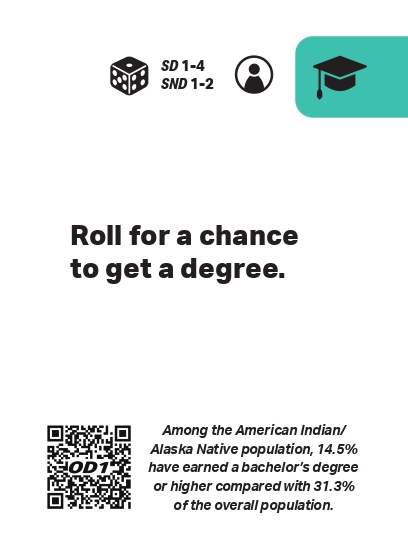

OD1
Among the American Indian/Alaska Native population, 14.5% have earned a bachelor’s degree or higher compared with 31.3% of the overall population.
“…of the single-race American Indian and Alaska Native population, age 25 and older…14.5 percent obtained a bachelor’s degree or higher. In comparison… of the overall population age 25 and older… 31.3 percent had a bachelor’s degree or higher.”

OD2
White students are twice as likely to receive merit-based aid from states, compared to their Black counterparts. And White’s average amount of merit-based aid was slightly higher than the average merit-based award to Blacks.
“Some 2.6 percent of White students received merit-based aids from states, compared to 1.5 percent of Blacks. And White’s average amount of merit-based aid was slightly higher than the average merit-based award to Blacks.”



OSU1
Latinx-owned firms are 10.6% of all U.S. businesses, Black-owned are 7%, and Asian-owned are 4.3%; all underrepresented compared to their U.S. population.
“According to the Small Business Administration, as of 2013, Black-owned firms represent 7 percent of all U.S. businesses, Asian-owned firms represent only 4.3 percent, and Hispanic-owned firms’ share is only 10.6 percent.”

OSU2
In 2018, Black and Latinx founders made up 1.7% and 1.3% of VC-Funded startups, respectively.
*See graph on page 8 of source material.

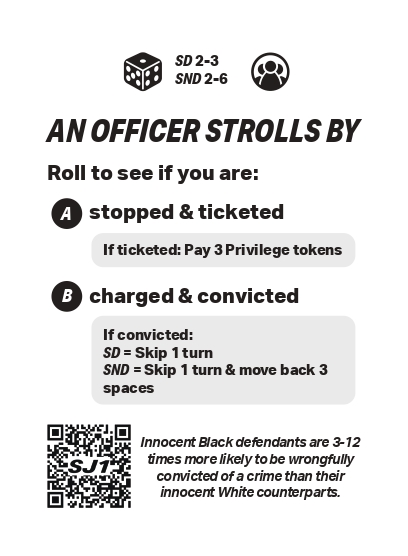

SJ1
Innocent Black defendants are 3-12 times more likely to be wrongfully convicted of a crime than their innocent White counterparts.
“Judging from exonerations, innocent black people are about seven times more likely to be convicted of murder than innocent white people.”
“…innocent black people are about 12 times more likely to be convicted of drug crimes than innocent white people.”

TB1
Black-owned businesses are half as likely to have obtained bank funds compared to White-owned businesses.
“The use of bank financing varies significantly by race and ethnicity of owner, firm revenue size, and credit risk, with highest reported bank funding found among firms with >$1M in annual revenues (57%), firms with low credit risk (55%), and firms with non-Hispanic white ownership (46%). By contrast, firms with Non-Hispanic black ownership are half as likely to have obtained bank funds (23%), and rates are similarly low among microbusinesses (that is, $100,000 or less in revenues)—24%—and those with Latino ownership (34%).”



TH1
Black borrowers are more than twice as likely to be denied a mortgage loan as their White counterparts.
*See graph titled “Purchase mortgage denial rates by race and ethnicity”.

TRE1
Black borrowers are more than twice as likely to be denied a mortgage loan as their White.
*See graph titled “Purchase mortgage denial rates by race and ethnicity”.



TW1
White applicants receive, on average, 36% more callbacks than Black applicants and 24% more callbacks than Latinx applicants with identical resumes.
“Since 1990 white applicants received, on average, 36% more callbacks than black applicants and 24% more callbacks than Latino applicants with identical résumés.”
Collaborators